
The body of an athlete, the mind of a monk, the output of a CEO and the soul of a child.
I left Goldman Sachs for the Chinese mountains. Not because I burned out. Because I was running at about 20%, and I could feel it.
You can't subdue a flamethrower with no off-switch. But you can point it — at a daily practice, at boundaries around your work, at a phone that answers to you, at evenings that belong to your family. Yin discipline.
You'll work less and do more. Nobody believes this part until it happens to them.
You ticked the boxes. Then: so what?
People look at your life and see someone who has it together. You know better.
You have drive — probably more than is convenient. You know how to work hard, push through discomfort, perform.
You also know the other side. Your attention is fragmented. Your body isn't where you want it. Work expands into everything.
Your phone eats more than you'd admit. Shallow breathing and tension say you're not quite as confident as you let on.
And beneath the performer is someone who craves depth and stillness. Who wants to stop, for once, and see your life.
But performance is part of you. Rejecting it isn't the answer. You don't want a fluffy mindfulness coach telling you to abandon your goals, be kind to yourself and drink some mindful tea.
The problem was never intensity
You have a colossal amount of energy. Always have. The problem is that it's leaking.
Left unchecked, you lose yourself to the noise.
You know what matters: exercise, meditation, nutrition, digital downtime, task, email and calendar management, mindset, intention-setting, communication, decluttering.
But you don't have the bandwidth to handle all of that at once — or the decision-making capacity. With a hundred things to do, you do nothing. And with a nervous system running on speed, you don't have the calm to do even the simple ones.
This coaching does both — internal practice for the cloth, systematic external work for the window. And the thinking about what to do, in what order, when: you outsource that to me.
The best performers in every field have a coach.
Your suspicion is right
They're not nine problems.
You've tried them separately. An app, a personal trainer, a productivity system that lasted three weeks. They held for a while. Then life got busy and the pieces came apart.
Here, they're one project. One place for everything, and a systematic framework to work through it — East meets West, the Zen practice and the systems honed at Goldman in the same room.
We build from the ground up, starting with the first minute of your day. Wake, and practise before you touch your phone. Then journal, logging the few habits that matter today. Once a week, a check-in: set your intentions, review last week's. And three times a month, you and I meet for 90 minutes.
Your personal sensei
I was a fat, addicted, stiff lawyer in chronic pain, trapped in the heart of the matrix at Goldman Sachs.
I used Zen practice to bend its rules — lost the weight, healed the pain and the addictions, and made the run of frightening decisions that built the life I used to daydream about. The Chinese mountains. Six hours a day of internal martial arts with a 31st-generation lineage holder, the first Westerner he's trained one-on-one. The rest of the day writing, and coaching a handful of brilliant individuals.
I don't believe in getting a coaching certificate to help people do things I'm too scared to do myself. I did them first — cut my Goldman workday to two hours while colleagues went on burnout leave — then wrote down how.
Not that you need to vanish up a mountain. You need to make the one decision you've been avoiding for years. I've made a few of those.
So yes: your cliché fantasy — a personal ex-Goldman sensei in the Chinese mountains who can get you enlightened, ripped and rich at the same time.
Potency, not volume
Most coaches scale. Twenty clients, dozens of hours of calls a week, the rest spent marketing — as busy and stressed as everyone else.
The deeper this work has gone, the fewer people I've taken. Five at a time, maximum.
I won't betray my centre for the noise — and I won't let you either.
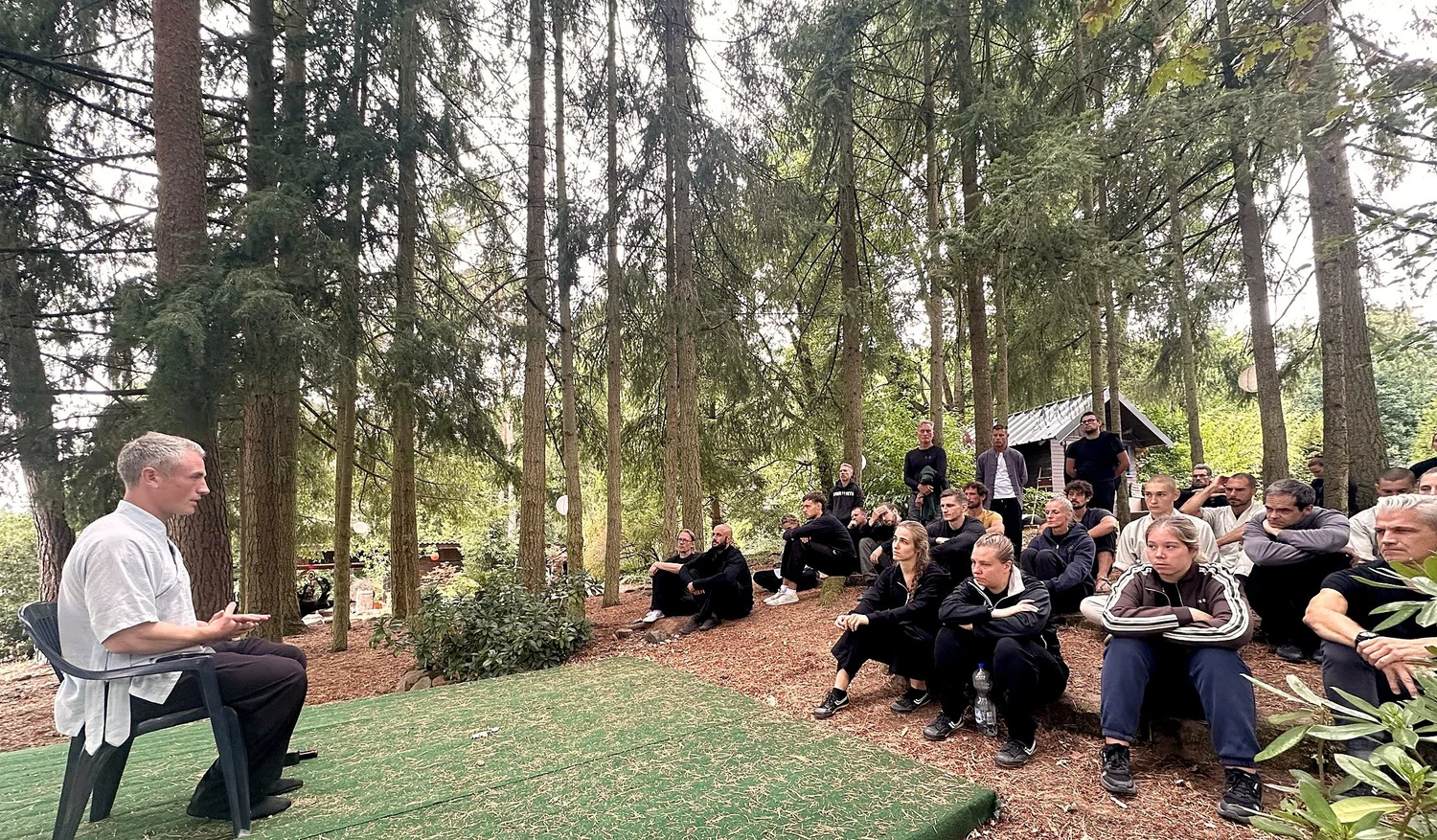
My experience
Internal Shaolin kung fu
Enter the hyperbolic time chamber. Download kung fu from the matrix. Hone the penetrating stillness of a Zen monk. Pick your fantasy.
I noticed early on that mind and emotions follow what we do with the body — in a big way. I got obsessed. I gave up my entire life to search for the methods that put Zen mind into movement.
I found Gulun Kung Fu. I train with Shifu Wu Nanfang, who taught Shi Heng Yi — the modern Bruce Lee, for those who don't know.
We practise standing exercises to develop grounded stillness and a calm, powerful presence, and breathing methods that sink nervous energy back to the centre. Signature Shaolin methods train you to find the deepest stillness in the heart of the storm, under physical challenge. And spiralling movements from the core teach the mechanics of internal power.
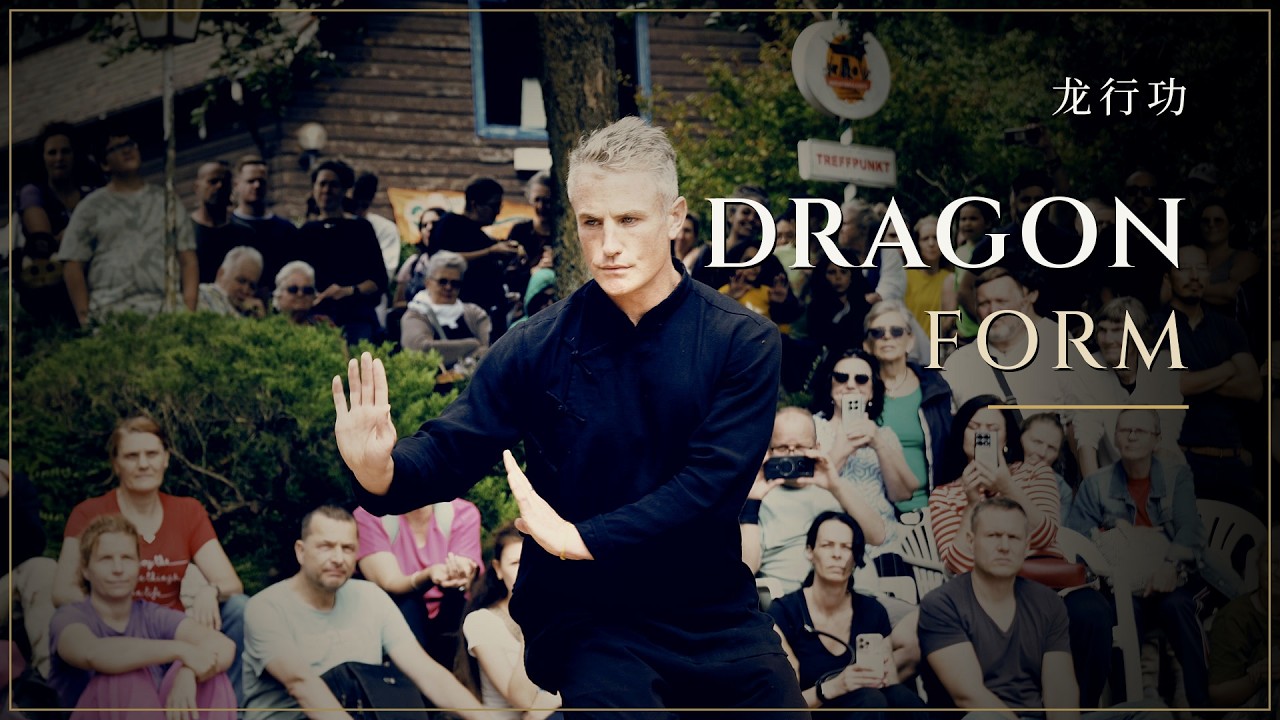
You aren't learning to fight. You're discovering nature. Yin and yang. True power that arises from stillness and softness, not brute force.
You re-educate your nervous system to generate power in alignment with nature. And so you re-educate your life.
Like a tiger lying low, conserving its energy until it's time to pounce. And when it pounces, there's a fearlessness under the calm. Without a trace of aggression, you give off a quiet “don't fuck with me” that commands respect and means you don't get taken advantage of.
It's the fastest way I know to change the state you make decisions from. You needn't punch trees in China. Thirty minutes each morning will change how you carry yourself through every meeting, every decision, every conversation.
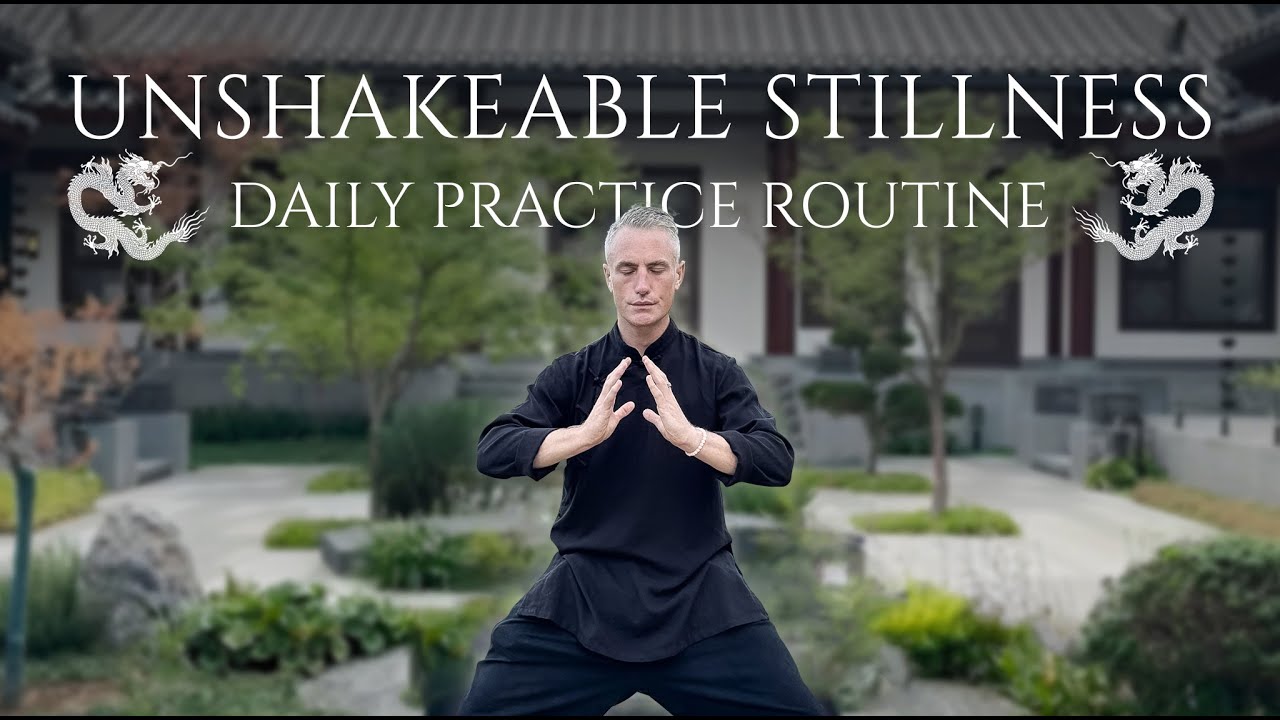
How we work
I'm not a coach or a therapist who just talks. The work is highly structured and action-oriented.
I'm a compulsive writer. I've made eight coaching programmes. See the materials from MindBodyWork Mastery, delivered for ASICS.
What changes
- Working hours halve while output doubles.
- Two-hour deep-work blocks, most days.
- Inbox zero — checked five times a day, not fifty.
- The three hours a day that were going to distraction, back.
- Fewer projects, done properly. One client went from seven to two.
- Boundaries that hold: evenings off, and in one case Fridays too.
- Years of physical decay reversed in months. As one client put it, the feeling of turning the tide is “priceless”.
- 10kg down, muscle up.
- The flexibility and strength of your twenties, back.
- Off — or well down on — alcohol, nicotine, coffee.
- A nervous system that's settled rather than running on speed.
- A morning practice of an hour or so that survives the fiercest storms of life.
- Screen time halved.
- Journaling that turns insight into decisions.
- The core switch: you experience directly that stillness outperforms striving, and you stop being tempted to run faster just this once.
- Hours of family time protected each evening.
- A consistent writing habit.
- The decision you've been circling — a new business, a move out of corporate — made.
- More time and energy to enjoy life, while staying productive.
See a detailed case study of how the coaching looks in practice
Transformations


